
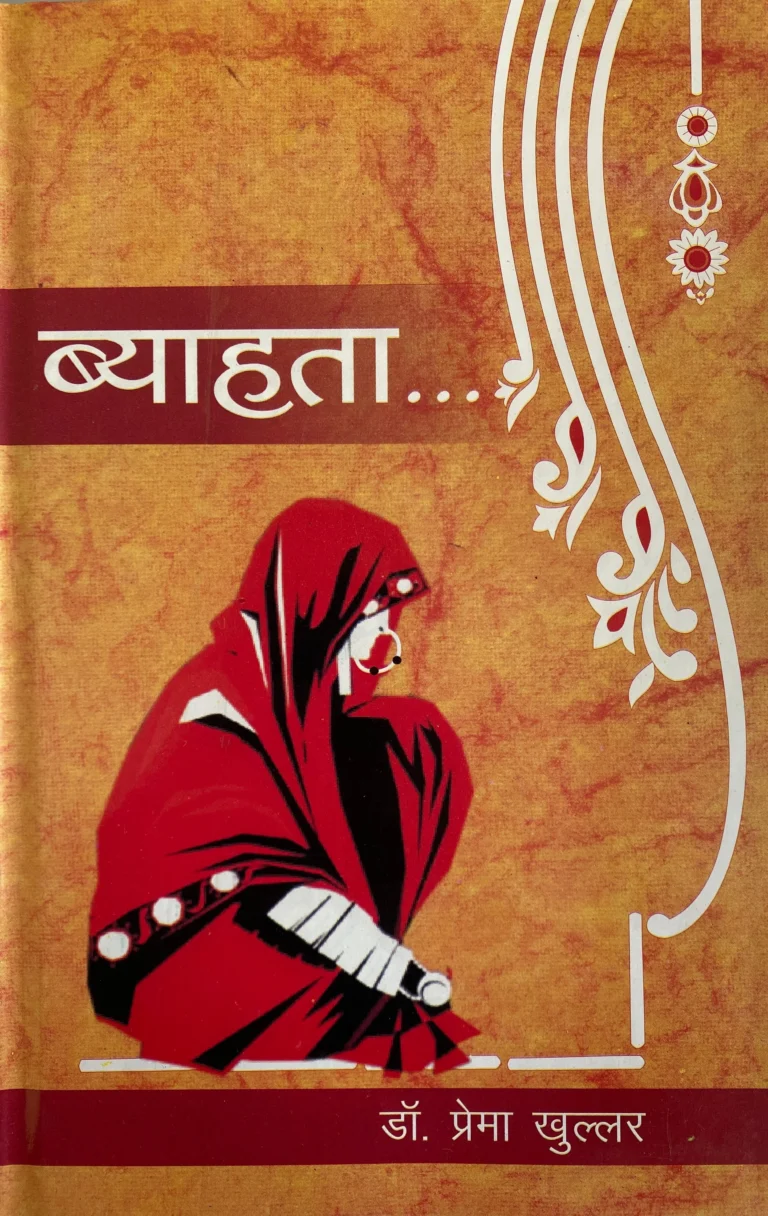
"Byaahta"
'Lawfully wedded wife'
Words by Late Kamleshwar for Byaahta
Senior Litterateur, Awardee of Padma Bhushan & Sahitya Academy Award
In all the stories in this collection, women emerge as thoughtful and dynamic individuals. Their foremost concern is often the creation of a happy family—a family filled with laughter and warmth, where the educational and economic environment is sufficiently supportive to ensure that even the shadow of sorrow or tension does not disturb the lives of its members.
Prema Khullar’s stories unfold many subtle layers of emotion within family relationships. Every member of a family possesses an individual identity—whether a mother-in-law, daughter-in-law, sister-in-law, brother-in-law, or elderly grandparents. Women, who often occupy the centre of family life, endure sacrifice and struggle according to their nature, yet they also refuse to allow their dignity, self-respect, or sense of worth to be diminished. Her stories explore questions of a woman’s identity, selfhood, and existence.
The manner in which Prema weaves together family incidents and situations is also highly commendable, reflecting the breadth of the author’s experience. Stories such as “Chhalte Rishte” and “Byahata” vividly portray the powerful currents of human relationships. Although these stories may not always display overt emotional intensity, they consistently offer rich possibilities for emotional conflict and reflection. Their linguistic strength is equally noteworthy. Prema expresses herself in a simple, accessible language that can easily be understood by women in ordinary domestic and family settings. Indeed, the stories appear especially relevant to homemakers as well as middle-class working women. Consequently, they offer intimate, nuanced, and empathetic portrayals of the everyday concerns faced by this section of society.
My heartfelt best wishes for these stories, which are filled with natural sensitivity and themes of great relevance to contemporary life.
"Byaahta"
'Lawfully wedded wife'
Words by Late Prof. Shukdev Singh for Byaahta
Senior Litterateur, Prof & Head of Hindi Deptt, BHU
Beginning with “Chhalte Rishte” (“Deceptive Relationships”), even the title of the story may create an unfamiliar sense of apprehension. Its opening lines are strikingly vivid and immediately evoke the flavour of everyday life. The narrative voice, coming from a sister-in-law, reflects a familiar Indian social tradition of playful, teasing commentary within family and ceremonial settings. The author uses such moments with remarkable ease while describing the many complexities and fluctuations of life. The story eventually brings us face to face with the challenges of old age and the emotional realities of elderly people. For me, this gives the work a particular significance. As someone closely engaged with issues concerning senior citizens and personally familiar with many of the complexities of ageing, I find the author’s writing both comforting and meaningful. Her stories offer not only an engaging reading experience but also an emotional refuge for elderly readers. Although the author may simply have invited readers to enter the world of her stories, I feel that readers of the “Byahata” collection will be found everywhere.
Another story, “Tanhai” (“Loneliness”), explores the struggles surrounding employment, family responsibilities, love, sacrifice, and the emotional isolation that can accompany old age. It too connects deeply with the concerns of senior citizens and offers a subject worthy of serious reflection.
The third work, “Byahata”, is more than a conventional short story; it is a novella written over approximately thirty-eight pages. Centred on the world of relationships and filled with emotional resonance, it is a work that readers may read as a story but remember like a novel. Through the character of Muskaan and her long wait for her husband, the work explores endurance, forgiveness, and the inner strength of an Indian woman.
The subsequent story, “Do Gaz Kapda” (“Two Yards of Cloth”), is a deeply moving and tragic narrative told in the language and atmosphere of rural life. “Astitva” (“Existence”) also explores the pains and complexities of ageing and prolonged waiting. “Pyaas” (“Thirst”) reflects upon the cultural, spiritual, and social significance of water in Indian life—from rituals and relationships to rivers, ponds, wells, and the many idioms through which water becomes a symbol of dignity and honour.
The stories in the “Byahata” collection are written by a woman and deal predominantly with the lives and experiences of women. Yet they do not rely on artificial modesty, nor do they descend into vulgarity. Written in an energetic and expressive language, these stories engage with both tradition and modernity. The author’s literary world contains the many layers of contemporary life—its cruelty, emotional conflicts, physical desires, and inner struggles.
These works are highly readable and remarkably free from unnecessary complexity. Their accessibility recalls the lucid narrative tradition associated with celebrated Hindi storytellers such as Bhagwati Prasad Vajpayee, Vishwambhar Nath Sharma Kaushik, and Premchand. The author appears deeply familiar with both modern urban life and the realities of rural India, as well as the complexities of ageing, love, separation, character, devotion, morality, attraction, and human frailty.
Her creative world presents the complete journey of a woman—growing, changing, remaining young in spirit, and eventually growing old. I would describe the movement of her prose as a gentle, restrained rhythm: not the highest note of music, but a deeply felt tone between anguish and restraint. I am confident that readers will engage with these stories and find both pleasure and emotional fulfilment in reading them.
Forgive me—I became so absorbed in discussing the stories that I momentarily forgot to mention the author’s name: Dr. Prema Khullar. Yet a name alone is of little consequence; it is through her writing that she will earn enduring recognition and literary distinction.
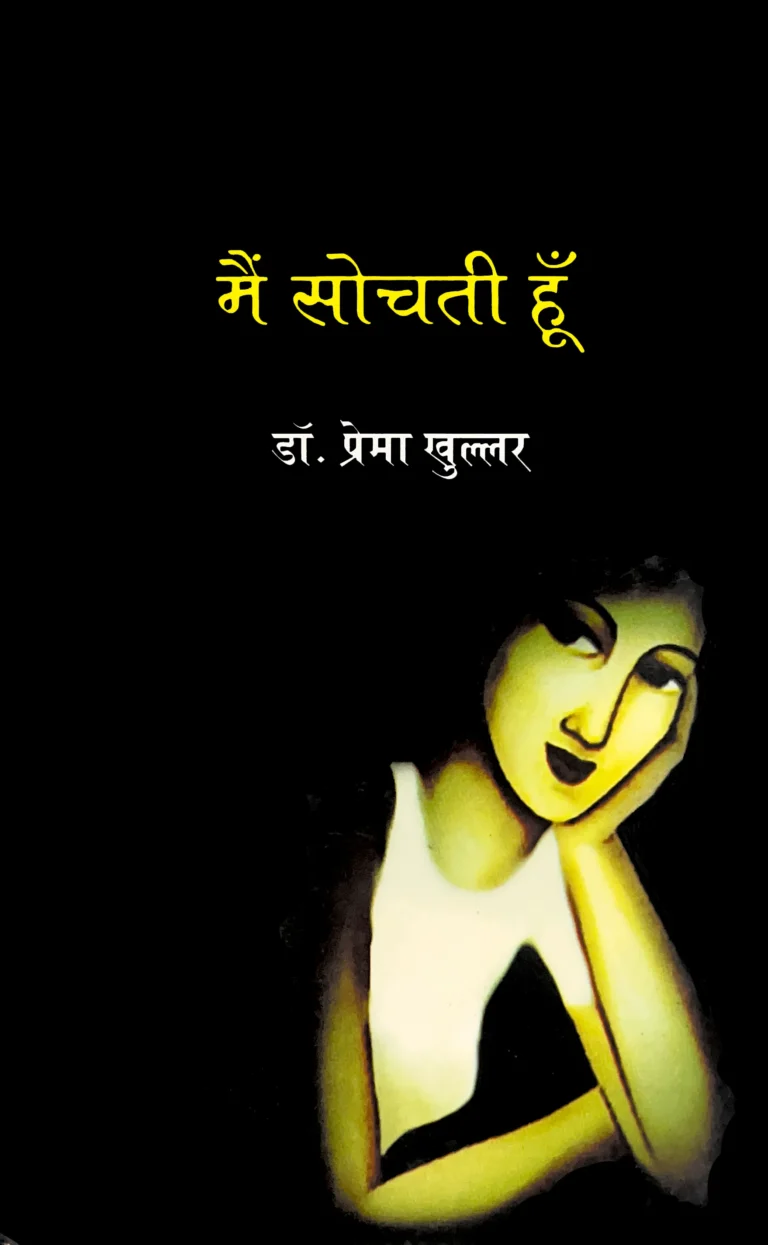
"Main Sochti Huun"
"In My Perspective"
Words by Late Dr. Lakshmi Mall Singhvi for Main Sochti Huun
"Indian jurist, Parliamentarian, Scholar, Senior Litterateur, Writer, Diplomat"
"Padma Bhushan Awardee, Second longest serving High Commissioner for India
I am delighted to have the opportunity, through this foreword, to appreciate the intellectual and emotional landscape of the essays collected by Dr. Prema Khullar in her book “Main Sochti Hoon” (transl. “In My Perspective”).
To think and to reflect are signs of a conscious awareness of one’s identity and existence. Every essay echoes Dr. Khullar’s distinctive perspective. They reveal her concerns, the movement of her thoughts, and her sensitive analysis and assessment of the social dimensions of life and philosophy. Her world of essays is guided by ethics, rooted in Indian values, enriched by a sense of dignity, and sustained by an inner current of spirituality. It seeks to understand and explain tradition, life, society, values, culture, and the environment. These essays also express reverence for the Earth and gratitude for the nurturing affection it bestows upon humanity. They celebrate the air, trees, flowers, nature, and the environment, while also offering praise, invitation, and a heartfelt call to Mother India and her people.
In this collection, the author presents thoughtful and positive reflections on a wide range of subjects, including the body, home, hunger, money, leftovers, setbacks, the elderly, behaviour, gentle conversation, duty, longing, values, thoughts, the mind, restlessness, stress, prayer, emotions, sin, humiliation, suffocation, devotion, sacrifice, happiness, beauty, contentment, joy, foolishness, and laziness.
In two highly accessible essays on the significance of auspicious symbols in India, the author presents a thoughtful and discerning discussion of symbols such as Om, the Swastika, Tulsi, rangoli, bandhanwar, and the ceremonial mandap, preserving their rich symbolic meanings.
In Dr. Prema Khullar’s world of essays, the earthiness of life and the vast sky of human values flow together like a sparkling, melodious stream. This stream, nourished by the pure currents of Indian culture and its way of life, possesses the power to enrich both our thinking and our lives. It therefore gives me particular pleasure to welcome this readable and thought-provoking collection of essays.
Many decades ago, while challenging a conventional belief, I wrote:
Neither fame nor wealth,
Nor comfort nor splendour,
Is the essence of life.
Power is merely the result
Of circumstances and chance.
Living alone is not life’s ultimate purpose;
To understand the meaning of life—
That alone is truly to live.
This collection of essays is an endeavour to understand the essence of life.
"Main Sochti Huun"
"In My Perspective"
Words by Muni 'Lokesh' for Main Sochti Huun
'Indian Jain monk, writer, and speaker whose work addresses Ahimsa (non-violence), interfaith dialogue, and social reform"
'National Communal Harmony Awardee California Assembly and Senate Honor U.S. President’s Volunteer Service Awardee'
It is always preferable to move beyond the terrifying realm of anxiety and turn towards thoughtful reflection. Not everyone is able to do so. Even after emerging from the entanglements of anxiety, a person may remain surrounded by doubt. Yet one who gathers meaningful moments of reflection and continues along this path succeeds in living life with a deep desire to endure and overcome.
Dr. Prema Khullar, a perceptive observer of the enduring relationship between words and emotions, possesses a remarkable capacity for thought. While creating in various literary genres, she also seeks to travel far along the path of reflection. It is relevant to note that the creator and the thinker, though moving in different streams, both illuminate the direction of their age. One seeks to express imagination, while the other prepares the ground for reaching conclusions through concentrated thought. Dr. Khullar has shaped a distinctive creative identity and established herself through her original work. Whatever the genre, her writing inevitably stirs the reader’s capacity for reflection. Once this process begins naturally, the reader embarks with Dr. Prema Khullar on a meaningful journey of creative understanding.
“Main Sochti Hoon” (“I Think”) marks the beginning of a process of reflection. The subjects that Dr. Khullar has carried in the boat of words and emotions are closely connected with life itself. Her simple, engaging, and lucid exploration of ideas woven into the deepest layers of the human mind reveals her exceptional creative ability. Readers will be both moved and enriched by these writings.
From “Jeevan” (“Life”) to “Main Aur Mera Bharat” (“I and My India”), these concise essays possess another remarkable quality: their lyrical mode of expression and their brief yet poignant observations, each of which expands the scope of thought. Distinct from Dr. Prema Khullar’s other works, this book is truly an attempt to gather meaningful moments of reflection and deserves appreciation from a wide readership.
"Main Sochti Huun"
"In My Perspective"
Words by Dr. Lakshmi Shankar Bajpai for Main Sochti Huun
Renound Poet, Gazalkaar, & Communicator. Retd. Deputy Director General, AIR Akashwani
"Delhi Hindi Academy awardee for Children's Literature Award'
People who think even a little are perhaps most troubled by a single question: Why do people not think? If people were to think, there would not be so much unrest, violence, hatred, and sorrow in our lives, nor would there be millions of pending lawsuits in courtrooms. If people thought deeply, then in the very same Dussehra fair where Ravana is burned as a symbol of evil, multiple real-life Ravanas would not commit their heinous acts, necessitating a massive police deployment. If people realized that the same blood flows through everyone’s veins, there would be no bloodshed or riots in the name of religion, nor would shops and homes be set ablaze, claiming the lives of thousands of innocent people. If people had been thoughtful, our air, water, and soil would not have become so polluted that the very existence of the entire planet is threatened. Looked at closely, it is the wisdom of thoughtful reflection that establishes a decisive distinction between animals and humans. Yet, despite possessing a heart and mind, and despite seeing and hearing everything through their eyes and ears, humans abandon thoughtful deliberation, suppress the voice of their conscience, and knowingly or unknowingly journey from light into darkness. A layer of dust settles upon the mirror of their mind. For this reason, incarnations, great personalities, and prophets have had to appear repeatedly on Earth to reawaken humanity’s dormant wisdom. Countless writers, scholars, and thinkers remain engaged in this very endeavor. Author Prema Khullar also makes a modest effort through her literary work to cleanse the dust gathered on the mirror of the human mind—a work that comes before us in the form of “Main Sochti Hoon”.
The author of ‘Main Sochti Hoon’ observes life deeply, reflects thoughtfully upon it, and then endeavors to share her thoughts with society through her pen. As a poetess and sensitive creator, she is deeply pained and concerned by the growing anomalies of daily life—fraying relationships, crumbling life-values, fading noble traditions, eroding moral boundaries, rising stress, and the hollow displays and behaviors dominating in the name of modernity. Articulating her thoughts into words, she integrates citations from sacred scriptures, reflections of great thinkers, and poetic verses of eminent personalities, giving her writings the form of succinct essays. These brief essays are like blossoms that scatter the fragrance of life.
The author draws her themes directly from everyday life. These encompass human relationships, human emotions, various dimensions of human behavior, and numerous facets of social and civic life. She expresses her views in simple language and a straightforward manner, never harboring the illusion of being a preacher. Rather, she presents her thoughts before readers with logic and analytical depth. The overarching objective of her entire writing is the establishment of a healthy and progressive society, as she writes in one of her essays:
“A nation’s strength rests upon the strength of its society. The life of a nation depends on the vitality of its social fabric. The sole objective of all Indians should be to establish a healthy, progressive society free from vices—even if we must stake our lives for it or transform the social structure. To fulfill this sacred duty toward our nation, society, and its prosperous future is our highest obligation.”
— I and My India
In today’s era, we witness an atmosphere of unrest in every household. Why is this so? Is a home merely a structure made of bricks? Presenting her perspectives in the essay titled ‘Home’, the author states:
“What should we call a home? A home is not merely a building constructed of mud, mortar, and bricks. A home truly signifies the people who reside within it—people imbued with feelings, emotional depth, values, and hospitality. It is a place characterized by cleanliness, sanctity, truthfulness, sacrifice, and selflessness; where guests are served, and mentors and God are revered; where love and harmony prevail, and elders are respected. Furthermore, a true home is one where people carry out well-planned duties while making everyone happy and fulfilled.”
— Home
In this mechanized age, we have discarded and renounced many of our finest traditions and cultural values. Reminding us of these very traditions in her essay titled ‘Juthan’ (Leavings/Sacred Offerings), the author writes:
“Earlier, after preparing food or delicacies, an offering was first presented to the Deity (Thakur) and then consumed by the family as sacred Prasad. But today, disregarding the sanctity of food bothers no one, because modern thought holds no reverence for old traditions.”
— Juthan
In the hectic rush of this machine age, our personal relationships have also shrunk. We have become cursed to live entirely for ourselves. In her essay ‘Brief Relationships’, the author writes:
“Gone are the days when multiple generations lived together harmoniously in a single family, sharing equally in one another’s joys and sorrows, living and dying for each other. Today, joint families have virtually disappeared, and meaningful relationships are fading away. Naturally, love is bound to vanish as well.”
— Brief Relationships
It is precisely due to this selfishness and self-centered behavior that we daily encounter news in newspapers regarding fatal conflicts in metropolises over trivial matters.
The author has also made subtle human emotions the subject of her writing. In her analysis within the essay titled ‘Restlessness’ (Vyakulata), she writes:
“Restlessness cannot be bound within any perimeter; it knows no boundaries. Sometimes, people remain unbothered by major calamities, yet at other times, a minor incident leaves them deeply agitated. Wherever there is disarray in the mind, restlessness inevitably resides. Someone suffers physical discomfort, another is troubled by mental anxiety, and yet another is distressed over wealth—whichever way you look, restlessness prevails.”
— Restlessness
Along with her own analysis, the author has enriched the thought quality of her work by incorporating maxims and quotes from saint-poets like Tulsidas, Kabir, and Rahim, as well as classical Sanskrit texts. Some essays are informative in nature, such as ‘Auspicious vs. Inauspicious’ and ‘The Significance of Auspicious Symbols in India’. Meanwhile, essays like ‘Flower’ and ‘Love’ take the form of lyrical, subjective essays (Lalit Nibandh) owing to their tender and poetic language:
“Love is a fragrance that fills the body, mind, and surrounding environment with sweetness. Love keeps the body, mind, emotions, and surroundings healthy and beautiful. Where love exists, fatigue and suffering cannot linger. Love is worship—one that people not only discuss far and wide, but venerate. Love is an embodiment of honor. Immortal love unites many into one. Love is ever-present; love rules without a sword.”
— Love
Nearly every essay encapsulates thoughts that can serve as keys to personal development. From these writings, a reader can derive hope, enthusiasm, faith, and confidence:
“Time is life itself. Whoever squanders time destroys life, for time never tire—it moves inexorably forward, and life too is not something that tires; it slips from one’s hands just like time.”
— Life
“A stumble awakens wisdom. A stumble is a lesson; after experiencing it, a person commits fewer mistakes. A stumble is not merely a physical wound—it touches both body and mind. It is a stumble that reawakens self-confidence and acts as the mother of growth. Upon stumbling, awareness dawns within an individual, making them vigilant.”
— Stumbling / Adversity
“When a human being realizes their internal flaws, the extent of their ignorance, how little they know, what goodness they have contributed to the world, and that they are merely an ordinary individual—when one truly feels their own ignorance—that very realization is knowledge.”
— Knowledge
“Through our behavior, we gain and lose much in this world. It is often observed that through good behavior, we shape our own destiny. For good behavior is inherently humble, patient, compassionate, wise, and knowledgeable. As a result of our good behavior, new pathways of wisdom open up, and through that wisdom, destinies are transformed.”
— Behavior
“Good thoughts foster a bright future. In every moment of life, our own noble thoughts are the catalyst for progress. As the foundation of a person’s thoughts elevates, their inner self appears beautiful, compassionate, and humble. To be united with noble thoughts is, in essence, the very manifestation of the Divine.”
— Thought
Comprising 41 essays, this book resembles a modest garden containing 41 plants, where every branch, leaf, and flower treasures priceless insights. In the present era, where most people are directionless, insensitivity continues to spread, and humanity is falling prey to inhumanity—having forgotten the art of thoughtful reflection and wandering aimlessly down unknown paths driven by selfishness—this book stands forth as a meaningful and creative intervention.
Communicating directly in a simple and effortless language, this work will engage readers in a meaningful dialogue, inspire them, and impart the message of a renewed life. Such is the firm belief.
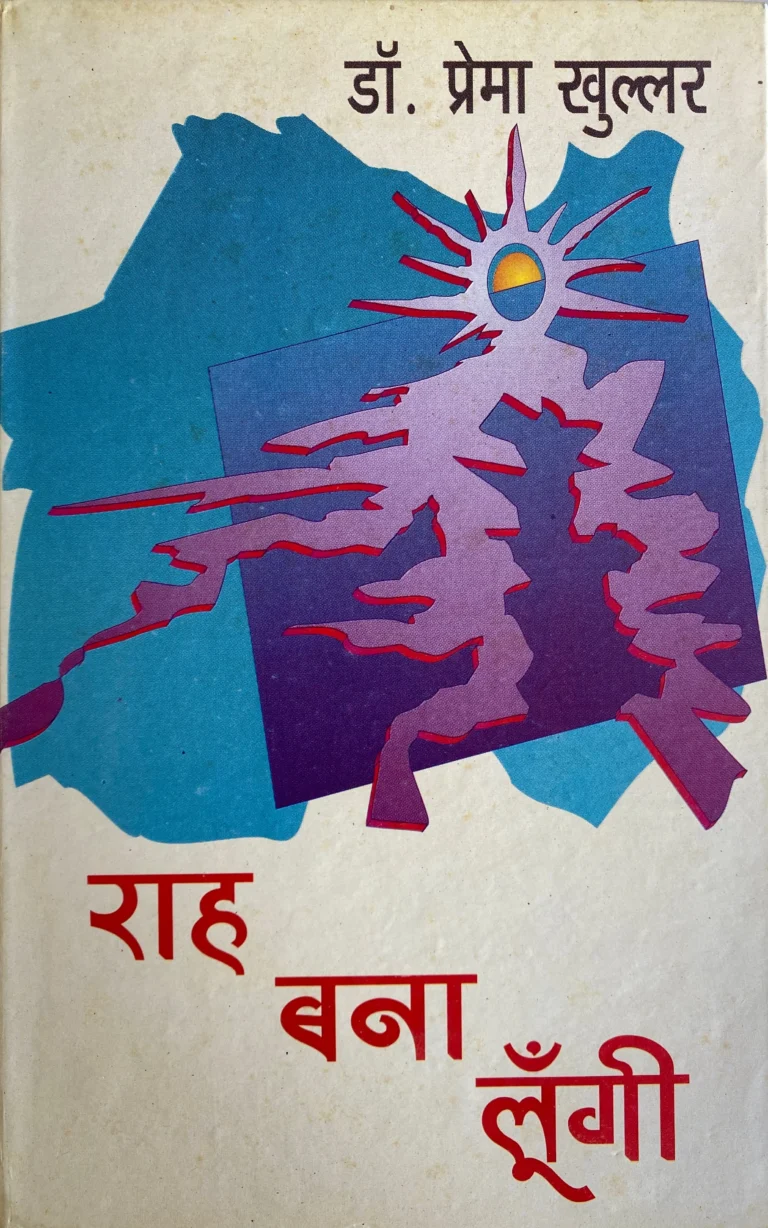
"Raah Bana Loongi"
"I will carve out a path"
Words by Late Dr. Shyam Singh Shashi for Raah Bana Loongi
Renound Indian socio–anthropologist, Senior Litterateur and Poet.
Padma Shri Awardee, Retd. Chancellor of Internatonal Roma University. D.Litt from University of Colombo
Creativity is not the exclusive inheritance of any individual, society, or social class. No one can predict from which heart the stream of poetry may suddenly emerge. Poetry is a fire that may burst forth like a spark in moments of emotional intensity, or expand like a mighty, overflowing river. At times it makes the earth flourish; at others, it breaks its banks and assumes a formidable form. To diminish poetry by confining it within worn-out critical terminology is to do injustice to the creative process. To bind it within a rigid definition is equally to wound human experience. Such experiences do not wait for a particular era; whenever the moment arrives, they begin to flow from within.
Today, the field of poetry includes many new and established voices. Some writers remain unable to publish a collection even after years of dedicated practice, while others bring their work before readers through cooperative organisations. It is not necessary that every work should conform to a single standard, for the very definition of literary merit has changed and poetry itself has become diverse in form and approach. Yet there are also writers who write simply for the joy of creation, giving expression to whatever arises within them without concern for metre, rhythm, or established critical methods.
In recent years, I have had the opportunity to examine several manuscripts and collections of poetry, including the manuscript of a gifted homemaker. In Dr. Prema Khullar’s work, suppressed and hesitant emotions sometimes rise like a tide; elsewhere, colourful expressions convey messages, romance, reflections of time, the darkness of night, pearl-like tears, incomplete dreams, and poignant images of pain. It would not be appropriate to force all of these into a single mould. True to the spirit of her name, Prema transforms her personal and familial affection into something universal, allowing her creativity to find its own path across the blank page. As a scholar of Sanskrit, one naturally hopes to see even greater linguistic fluency and refinement in her work. May she continue to advance steadily along the path of creative discipline and literary practice.
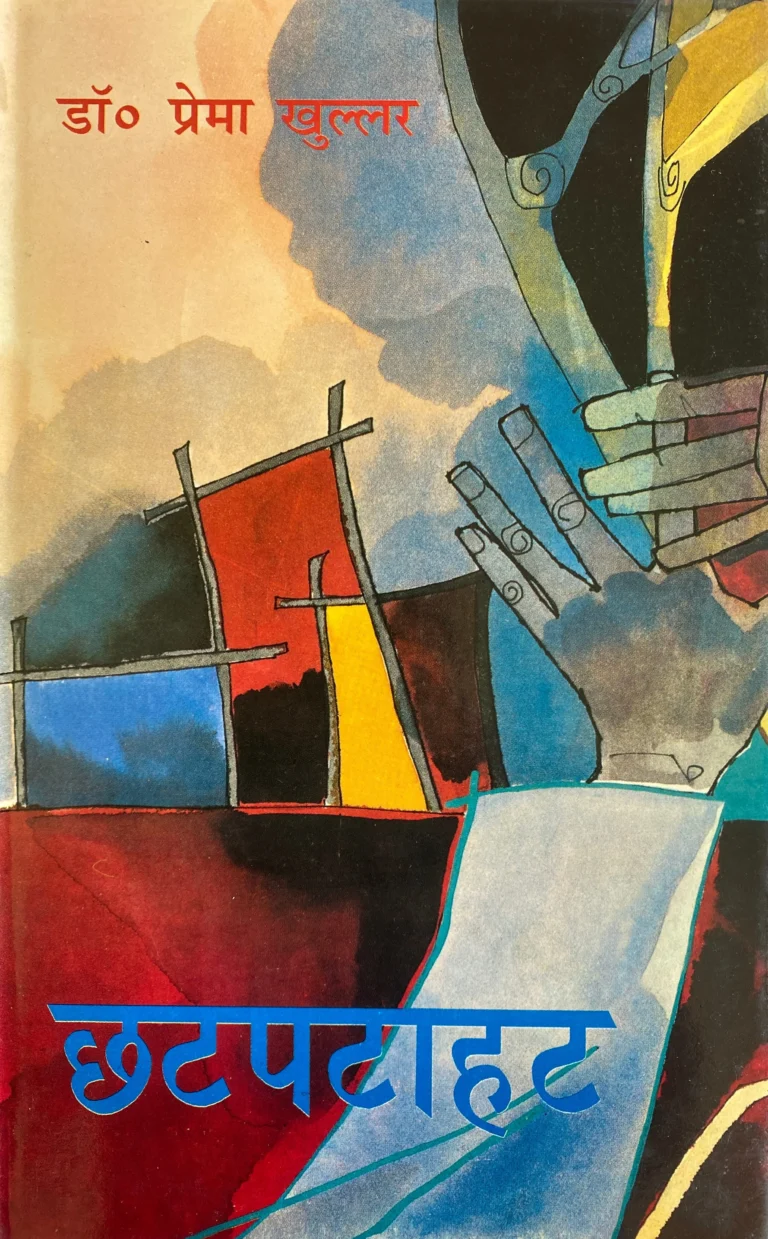
"Chhatpatahat"
"Restlessness"
Words by Late Dr. Shyam Nirmam for Chhatpatahat
Renound Senior Litterateur and Poet.
My first acquaintance with Dr. Prema Khullar was as a poet and an accomplished homemaker. However, when I read the manuscript of her stories, I was pleasantly surprised to discover that she was not merely a sensitive poet but also a socially aware storyteller. While reading her poetry collection “Raah Bana Loongi” (“I Will Make My Own Path”), I felt that, as a woman, she possessed a deep understanding of female psychology. This understanding enables her to bind together thoughts, events, and circumstances and give them meaningful expression.
The brevity of poetry sometimes leaves limited space for the wider expanse of life and its circumstances. Perhaps this is why, in her stories, Dr. Prema does not rely solely on imagination and emotion; she also attempts to portray, on the ground of reality, a woman’s dignity, anger, joys and sorrows, and experiences of rise and decline.
These stories emerge as expressions of the individual, the family, society, and the nation. Although they may not always display complete artistic maturity, they portray the relationships between women and men, the confusion of life amid the race for modernity, the growing pain and restlessness of the human mind, the piercing loneliness that follows emotional turmoil, and the joy and terror of union and separation. They also give voice to relationships that cry out in anguish and to the joys and sorrows that inhabit a woman’s heart from birth to death.
Many narratives of the female psyche find a place in these stories. Yet, given the direction in which contemporary fiction is evolving, Prema Ji may further strengthen and sharpen her language so that she can portray with even greater depth the complexities of modern life, its conflicts, and its social concerns.
The most prominent qualities of these stories are their simplicity, naturalness, and unpretentiousness. There is neither artificiality nor needless embellishment; what has been seen and experienced is expressed without concealment or pretence. Along with their many possibilities, the stories carry the fragrance of intimate relationships, waiting to reveal itself more fully with time. I am confident that these stories will establish a meaningful dialogue with readers and, in their own way, speak directly to them.
"Chhatpatahat"
"Restlessness"
Words by Dr. Pratima Verma for Chhatpatahat
Renound Litterateur, Writer and Story-teller.
The first flower in Mrs. Prema Khullar’s garden of creativity, “Chhatpatahat” (“Restlessness”), offers a realistic portrayal of the compulsions and struggles of a woman’s life. It is an undeniable truth that the written and unwritten constitution of a male-dominated society has, for centuries, neglected the dignity and identity of women. Whether she is a daughter, beloved, wife, homemaker, mother, or working woman, she often finds herself confronted by the possibility of exploitation.
The author touches upon these many dimensions with sensitivity and awareness: broken love and marriage in “Kasak”; the sexual exploitation of a working woman in “Bhatkav”; obstructed love in “Pratidan”; the painful turns of life in “Anchhui Vidhwa”; the loneliness of a widow in “Sambandh ke Dayre Mein”; a woman deceived by her own family in “Siskta Aanchal”; domestic conflict in “Aakhir Kyon”; the suffering of a young woman denied justice in “Aartanad”; and the tragic end of a rural woman in “Chhatpatahat”. These are living realities around us, described by the author in a simple yet deeply moving manner.
All the stories are enriched by experience and sensitivity. As the author writes in a language other than her mother tongue, this has inevitably influenced certain aspects of her narrative craft. Nevertheless, I am confident that her future works will reveal an increasingly powerful and mature literary voice. A writer is a vigilant sentinel of society, and the author has demonstrated this role even in her very first creative effort. This new voice at the threshold of Hindi literature carries with it many hopes.